AI Can Now Rebuild Software in Days: How to Protect What Makes Your Business Unique in the U.S.
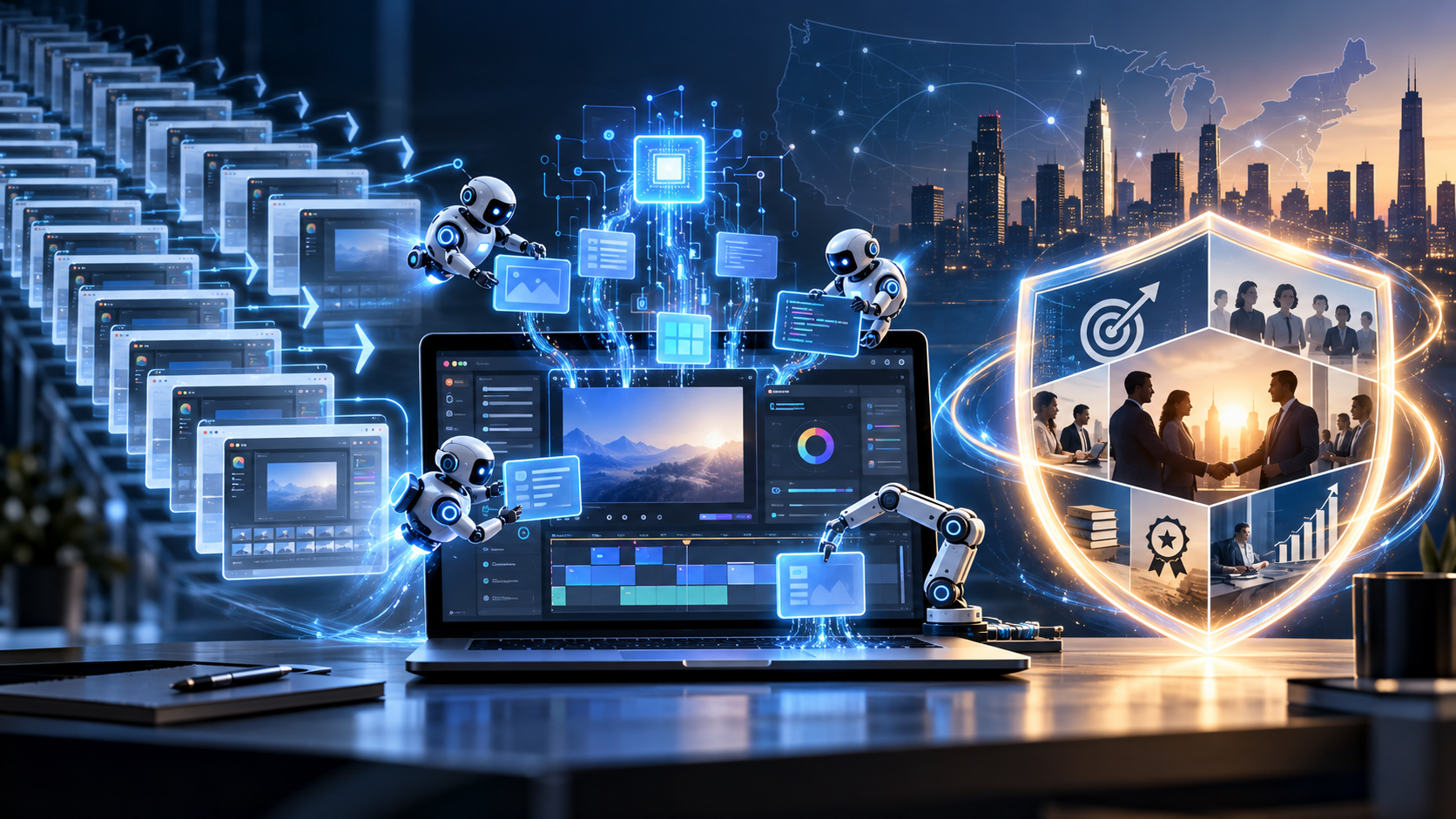
AI software cloning is here: in early October 2026, developer Brandon Thomas released ArtCraft, a family of free, open-source apps that recreate well-known tools such as Photoshop, Premiere and Lightroom. They are written in Rust and were built with Claude Code and AI agents. The story is a clear case of AI software cloning: a product can be rebuilt in days, and it prompts a useful question for any company preparing to enter the U.S. market: what protects a business when its product can be copied?
What Happened
Thomas says the suite includes seven programs written from scratch in Rust, with versions of Photoshop, Illustrator, Premiere, Lightroom, After Effects, InDesign and Acrobat, and he describes them as clean-room reimplementations. He used Anthropic’s Claude Opus 5.5 and cites frustration with Adobe’s early-cancellation fee as his motivation, according to Plagiarism Today.
The project is candid about its stage. The PhotoCraft README describes it as early alpha and “not yet a Photoshop replacement for daily professional work.” On October 12, Trending Topics reported that the project’s website had removed its download links and that Adobe and Microsoft had not commented.
What the Law Protects Today
Legal commentary from the past week points to the same picture:
- Copyright covers code, and leaves functionality open. Plagiarism Today sees the apps on “decent footing” against traditional copyright claims, and notes that code written entirely by AI may fall outside copyright altogether.
- Contracts carry weight. Law firm Falcon Rappaport & Berkman writes that contract terms, such as limits on reverse engineering, are probably the strongest remaining tool, next to patents on specific technical improvements, trademarks and trade secrets.
- The area is still taking shape. No court has applied these rules to AI-generated software yet, and as of October 11 the firm found no reported lawsuits over these clones.
What This Means for Your U.S. Entry
AI software cloning means a product can be rebuilt faster than ever. A trusted brand, clear contracts and local relationships take longer to copy. Three steps to start with:
- Register your brand name and logo as trademarks for the U.S. market.
- Review your terms of service and partner contracts with a U.S. attorney, including clauses on reverse engineering and competitive use.
- Place your hardest-to-copy assets at the center of your plan: client relationships, service quality and local reputation.
For a company preparing to enter the U.S., AI software cloning shifts the question from “can someone copy my product?” to “what will customers still choose me for?” Companies that enter with a clear brand, solid contracts and a U.S. presence in place give customers reasons to stay that code alone cannot reproduce. Preparing these foundations before launch, rather than after, keeps your U.S. plan on firm ground.
This article shares general information and complements, rather than replaces, advice from a U.S. attorney.
The Bottom Line
ArtCraft is an early-stage project and its path is still open. What it shows is the pace: AI software cloning can rebuild software in days, so lasting value lives in brand, contracts and relationships, the foundations of a well-planned U.S. entry.
Are You Considering Expanding Your Company Into the United States?
Appalanca is an internationalization consultancy that prepares Latin American companies to enter and grow in the United States. We work with you to prepare, adapt, position, connect and grow in the market, and we start with a free consultation with our founder.